Every serious strength training setup depends on one piece of equipment that never changes: the weight plate. Barbells, racks, and benches get the attention but Olympic weight plates determine how accurately you load, how safely you train, and how long your gym floor survives daily use.
This guide covers everything gym owners, sports academies, and home gym builders in India need to choose the right Olympic weight plates including plate types, quality factors, exercise applications, and what separates commercial-grade plates from budget alternatives.
Olympic weight plates are strength-training discs with a standardised 50 mm centre hole designed for Olympic barbells used in professional and commercial training environments. The 50 mm specification ensures a stable, consistent fit across all Olympic bars standard plates with smaller holes are incompatible and rarely seen in modern commercial or professional setups.
Olympic plates are available from 1.25 kg to 25 kg per plate in standard commercial configurations, allowing systematic progression from beginner loads through advanced strength training.
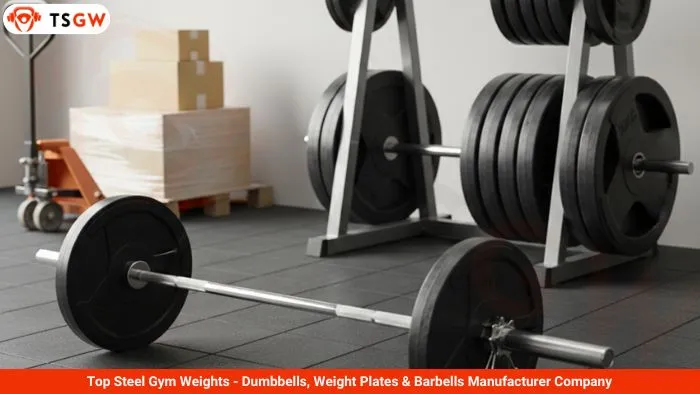
Rubber-coated Olympic plates are the most widely used type in modern commercial gyms across India. The cast iron core delivers density and weight accuracy. The rubber coating handles everything else floor protection, noise reduction, rust resistance, and durability under heavy daily use.
These plates suit commercial gyms, functional training zones, hotel fitness centres, school facilities, and home gyms. For Indian commercial environments specifically, rubber-coated cast iron is the practical default. Flooring quality varies across facilities, noise sensitivity is high in residential and hotel properties, and commercial plates see heavy use from multiple members every day. Rubber coating handles all three realities well.
Top Steel Gym Weights’s rubber-coated Olympic plates feature a cast iron core, standard 50 mm centre hole, and a 3-cut grip design for safe handling available from 1.25 kg to 25 kg.
Plain cast iron plates are the traditional choice for strength training and powerlifting. Their thinner profile at equivalent weights means more plates fit on the bar before running out of sleeve length which matters for advanced lifters working at heavy loads.
The key limitation: cast iron plates are not designed to be dropped from height. Any facility where Olympic lifts or deadlifts involve releasing the bar at the top should not use plain cast iron at those stations. Repeated drops will damage both plates and flooring.
Bumper plates are made from dense rubber and built to absorb repeated drops from overhead or hip height making them the correct and only safe choice for Olympic lifting. They also feature a consistent outer diameter across all weights, which places the bar at a standard height from the floor regardless of load important for maintaining consistent pull mechanics across beginner and advanced lifters.
The trade-off is bulk. Bumper plates are thicker per kilogram than cast iron, which limits total load on the bar. For general strength training where the bar is always lowered under control, rubber-coated cast iron is sufficient. For any facility with a dedicated Olympic lifting platform, bumper plates are non-negotiable.
Polyurethane coating is the premium tier harder and more abrasion-resistant than rubber, holding its shape and finish longer in high-volume commercial environments. These plates suit premium fitness studios, luxury hotel gyms, and high-end commercial facilities where long-term aesthetics justify the higher upfront cost. For standard commercial gyms, rubber-coated plates deliver equivalent functional performance at a more practical price point.
Olympic weight plates are not passive equipment quality directly affects how the most important compound movements perform.
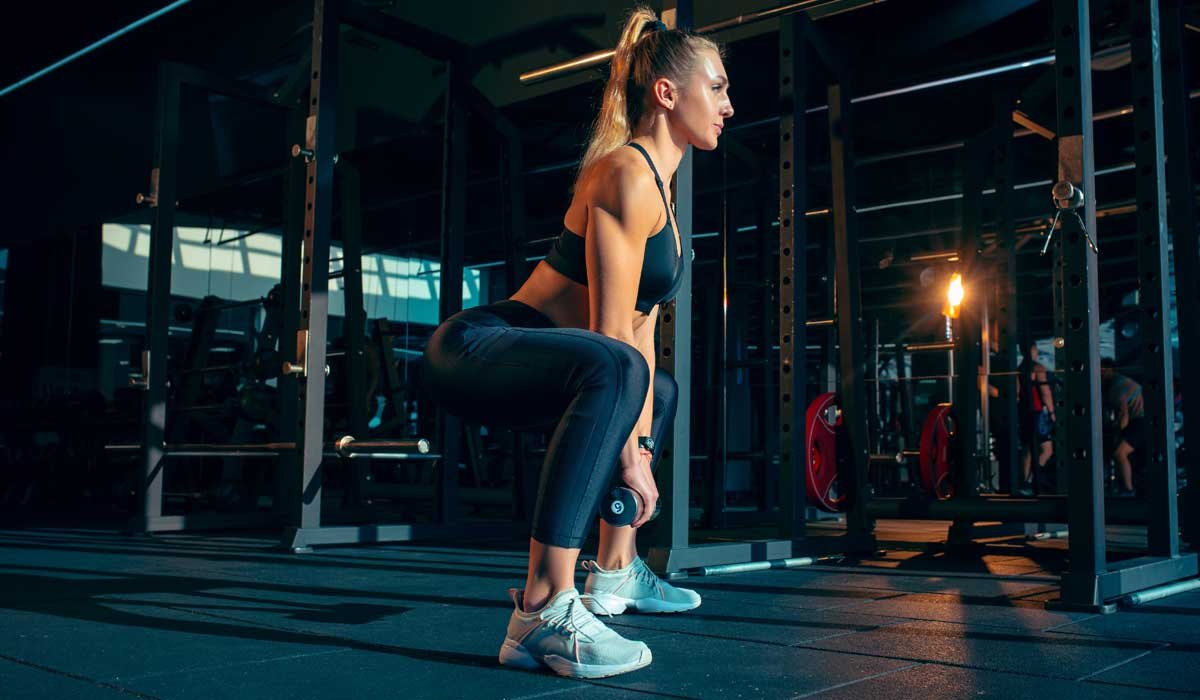
For barbell squats, bench press, and overhead press, weight accuracy is the critical factor. Inconsistently manufactured plates create asymmetric loading across the bar, which increases injury risk and undermines programming consistency over time.
For deadlifts, outer diameter consistency matters. Bumper plates’ standardised diameter places the bar at a consistent height from the floor regardless of load important for teaching and maintaining correct pull mechanics.
For Olympic lifts the clean and jerk, snatch, and their variations bumper plates are required without exception. The bar will be dropped. Cast iron will not survive repeated drops and will damage your platform.
For plate-only exercises such as the farmers carry, plate front raise, and Russian twists, grip rim quality matters most. A well-designed 3-cut grip rim makes these exercises safer and more comfortable, particularly during longer conditioning circuits where grip fatigue accumulates.
Frequently Asked Questions
What is the difference between Olympic and standard weight plates? Olympic plates have a 50 mm centre hole designed for Olympic barbells. Standard plates have a smaller hole fitting older-style standard bars. For any modern training setup commercial or home Olympic plates are the correct choice for compatibility, accuracy, and long-term use.
Are rubber-coated Olympic plates better than cast iron for a commercial gym? Yes, for most commercial environments in India. Rubber coating protects floors, reduces noise, resists rust in humid and coastal conditions, and lasts longer under heavy daily use. The higher upfront cost is typically offset by lower floor maintenance and replacement costs over time.
What is the difference between bumper plates and rubber-coated cast iron plates? Bumper plates are made entirely from dense rubber and are designed to be dropped repeatedly from overhead essential for Olympic lifting. Rubber-coated cast iron plates have a cast iron core with a rubber shell, are more compact per kilogram, and suit general strength training where the bar is always lowered under control. Most well-equipped gyms carry both.
What plate configuration should a new commercial gym in India buy? Stock the full range from 1.25 kg to 25 kg, prioritise rubber-coated cast iron plates for the main floor, and add bumper plates at any Olympic lifting or deadlift platform area. Buying from a domestic manufacturer avoids import costs and keeps restocking straightforward.
Can Olympic weight plates be used in home gyms? Yes. Olympic plates offer better weight accuracy, longer lifespan, and wider compatibility with modern home gym equipment barbells, power racks, and functional trainers than standard plates. For home gym setups in India, rubber-coated Olympic plates are the recommended starting point for both performance and floor protection.
Build Your Strength Zone with Top Steel Gym Weights
At Top Steel Gym Weights, we manufacture commercial-grade Olympic weight plates for gyms, fitness studios, sports academies, hotels, schools, and corporate wellness facilities across India.
Our rubber-coated Olympic plates are built with cast iron cores for weight accuracy, a standard 50 mm centre hole for universal barbell compatibility, and a 3-cut grip design for safe plate handling in high-use commercial environments available from 1.25 kg to 25 kg, in rubber-coated, plain cast iron, and PU-coated finishes.
We also supply complete gym setup solutions from floor plan design through equipment selection and delivery so your strength training area is planned correctly from day one.
Contact Top Steel Gym Weights for Olympic weight plates, strength training equipment, and complete commercial gym setup solutions across India including Ahmedabad, Vadodara, Surat, Mumbai, Bangalore, Hyderabad, Pune, Delhi, and nationwide.
Top Steel Gym Weights is a manufacturer and supplier of professional fitness equipment for commercial and institutional gym environments across India.