Every gym owner and home lifter has heard the same advice: get rubber coated hex dumbbells if you care about your floor and your neighbours. What rarely gets explained is why this actually works what’s physically happening when a 20 kg dumbbell hits the ground and somehow doesn’t crack the tile or wake the household. The answer comes down to two design decisions working together: the rubber coating and the hex shape. Each solves a different part of the problem, and understanding both makes it much easier to tell a genuinely well-made set from one that just looks the part.
A dumbbell dropped or set down delivers a sudden, sharp force into whatever surface it lands on. With a bare cast iron or chrome dumbbell, that force transfers almost entirely and instantly into the floor, there is nothing between the hard metal and the hard surface to absorb the energy. The result is a loud impact sound and a transfer of stress directly into tile, wood, or concrete that, repeated daily, causes visible wear, cracking, or dents over time.
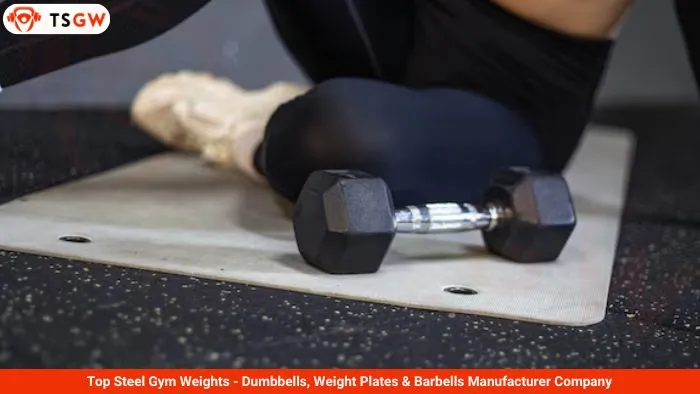
A rubber-coated dumbbell changes this physics. The rubber shell is a flexible, energy-absorbing layer between the metal core and the floor. On impact, the rubber compresses slightly and spreads the force over a longer fraction of a second and a wider contact area, rather than letting it strike all at once. This is the same basic principle behind a rubber sole on a shoe versus a hard leather one same weight, very different impact.
Not all rubber coatings deliver this protection equally, and the difference comes down to two things: thickness and how well the rubber bonds to the metal core.
Thicker rubber compresses more under impact, which absorbs more energy and transmits less shock into the floor. This is why genuinely commercial-grade rubber coated dumbbells feel noticeably more substantial than budget versions at the same stated weight more material is doing more work to protect both the floor and the dumbbell itself.
Bonding quality matters just as much as thickness, and this is the part most buyers never think to check. The process of bonding rubber to steel involves high-temperature vulcanisation a method that fuses the rubber to the metal core so the coating won’t peel or crack over time. A poorly bonded coating might look identical to a properly vulcanised one on day one, but it will separate, crack, or come loose at the edges after months of repeated impact at which point the dumbbell stops protecting your floor at all and starts exposing bare metal edges that can do real damage.
This is also why genuinely well-made rubber coated dumbbells cost more than they might seem to need to. The extra cost is not the rubber itself it’s the time and process control required to bond it properly so the protection actually lasts.
Rubber coating absorbs impact, but it does nothing to stop a dumbbell from rolling once it’s set down and a rolling dumbbell is both a tripping hazard and something that eventually rolls into a wall, a rack leg, or someone’s foot hard enough to cause damage the coating wasn’t built to absorb in that direction.
The hexagonal head shape solves this directly. Six flat sides mean the dumbbell always has a stable resting face on the floor, with no curved surface to roll along. Set it down anywhere, at any angle within reason, and it stays exactly where it lands. This single geometric decision is why hex dumbbells dominate commercial gym floors over round designs in busy, high-traffic training areas the predictability matters as much as the protection.
The hex shape also makes storage genuinely easier. Hex heads stack and rest against each other on a rack shelf without the tendency to roll off that round dumbbells have, which is a small but real factor in keeping a busy gym floor organised and safe.
It’s worth being clear that these are not two separate benefits they are two effects of the exact same physical process. Noise from a dropped dumbbell is simply the sound energy released when a hard impact happens quickly. Reduce the speed and sharpness of that impact with a compressible rubber layer, and you reduce both the force transmitted into the floor and the volume of the sound produced, at the same time, for the same reason.
This is precisely why rubber coated hex dumbbells are recommended so consistently for apartment gyms, early-morning training, and shared residential spaces. A bare metal dumbbell set down with moderate care can still produce a loud, sharp noise that travels through floors into the rooms or flats below. A properly coated dumbbell set down with the same care is dramatically quieter not because the user is being more careful, but because the equipment itself is absorbing what would otherwise become noise.
A new rubber coated dumbbell will look identical whether it’s been properly vulcanised or just dipped and dried quickly to cut costs. The real test only shows up after months of regular use in a commercial environment, which is exactly when buyers least want to discover a problem.
Watch for these signs that coating quality has been compromised: the rubber separating or lifting at the edges where it meets the handle or the seam between dumbbell heads, a hollow or loose feeling when you tap the rubber against the metal underneath, or visible flattening and permanent denting in spots where the dumbbell is regularly set down. None of these should happen on a properly bonded coating within years of normal commercial use, if they appear within months, the bonding process was almost certainly rushed.
Ask any supplier directly about their bonding process rather than just the coating material “rubber coated” alone tells you very little, since both a properly vulcanised premium dumbbell and a quickly dipped budget one can carry the same label. A manufacturer with genuine quality control will describe their casting, moulding, and bonding process specifically. A reseller simply passing through stock will usually default to vague reassurance.
It’s also worth physically handling a sample where possible. A well-bonded coating feels solid and seamless when you run a hand across it, with no give or hollow spots between the rubber and the metal core beneath.
Do rubber coated hex dumbbells fully protect floors, or do I still need gym flooring underneath? Rubber coated hex dumbbells significantly reduce the force and noise of impact compared to bare metal dumbbells, but the dumbbell’s own weight is still substantial. For floors that are particularly sensitive hardwood, tile, or laminate adding a rubber gym mat underneath provides an additional layer of protection and is genuinely worth the modest extra cost, especially in a home gym setting.
Why do hex dumbbells cost more than round dumbbells of the same weight? Hex dumbbells require precision casting into a six-sided mould and consistent rubber coating across flat faces and edges, which is a more demanding manufacturing process than a simple round shape. The anti-roll stability and storage convenience this provides is generally considered worth the modest cost difference, particularly for busy commercial gym floors.
How can I tell if a rubber coated dumbbell has a properly bonded coating? A properly vulcanised coating feels solid and seamless when handled, with no hollow sound when tapped and no visible gap between the rubber and the metal core. Ask the manufacturer directly about their bonding process vulcanisation is the industry-standard method for genuine durability, and a supplier confident in their process will describe it specifically rather than offering vague reassurance.
Is rubber coating or urethane coating better for floor protection and noise reduction? Both provide genuine floor protection and noise reduction through the same impact-absorbing principle. Rubber coating is more economical and remains the standard choice for most commercial and home gyms. Urethane coating is a premium alternative that resists wear, chemicals, and odour slightly better over very long-term heavy use, at a correspondingly higher cost most facilities find rubber coating delivers excellent value without needing to step up to urethane.
Are rubber coated hex dumbbells suitable for heavy commercial gym use? Yes, provided the coating is properly bonded through correct vulcanisation and the core casting is precision-made for consistent weight and structural integrity. Commercial gyms with high daily usage should specifically confirm bonding quality and weight tolerance with their supplier, since these are the two factors most likely to be compromised in lower-cost, lower-quality alternatives.
At Top Steel Gym Weights, we have manufactured dumbbells, weight plates, and barbells from our facility in Vadodara, Gujarat since 2012. Our hex dumbbells are precision cast from high-grade iron into hexagonal moulds, fitted with solid steel handles welded for long-lasting durability, and finished with a thick, properly bonded rubber coating specifically engineered to reduce noise, protect flooring, and extend service life under heavy daily use. Every dumbbell is tested for weight accuracy and balance before final inspection and branding.
Our manufacturer-direct pricing and consistent quality have made us a trusted supplier to resellers, sports equipment retailers, and gym chains across India, with export reach into international markets including Indonesia, South Africa, Australia, the USA, and Dubai.
Looking for genuinely durable rubber coated hex dumbbells at manufacturer-direct pricing?
Contact Top Steel Gym Weights for bulk quotes, dealership opportunities, and export inquiries across India and internationally.
Top Steel Gym Weights (TSGW) is a dumbbell, weight plate, and barbell manufacturer based in Vadodara, Gujarat, serving gym owners, sports retailers, dealers, and institutional buyers across India and international markets.