This comparison gets asked constantly, and it deserves a more careful answer than “rubber is better” or “iron is classic” because for a home gym specifically, the right choice depends on details about your space, your training style, and your flooring that a generic answer skips past entirely. Both plate types use the same cast iron core and fit the same standard 50 mm Olympic barbell the difference that actually matters is everything built around that core.
This guide walks through that difference honestly, including where iron plates are genuinely the smarter choice despite rubber’s reputation as the universal upgrade.
What Each Plate Actually Is
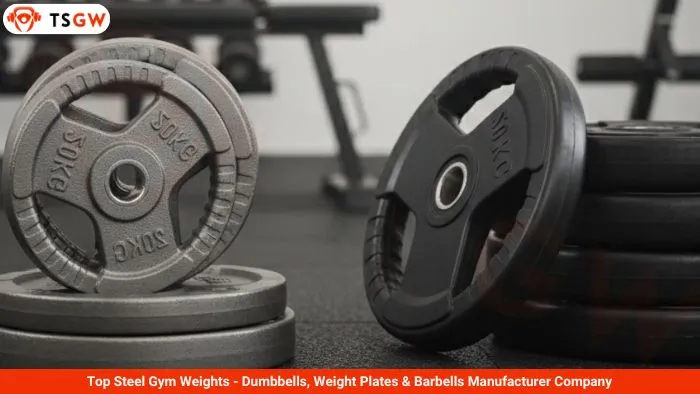
Cast iron Olympic plates are solid metal discs, typically finished with a painted or enamel coating purely for corrosion resistance and a clean appearance. There is no cushioning layer between the metal and whatever surface the plate touches what you see is structurally what you get.
Rubber coated olympic plates start with the same cast iron core, but the core is encased in a moulded rubber shell, bonded to the metal through a heat and pressure process. The core still provides the weight and the structural strength; the rubber adds a compressible layer around it that changes how the plate behaves on impact, in storage, and over years of handling.
It’s worth being precise about one common point of confusion here: a rubber coated plate is not automatically a bumper plate built for repeated dropping from height. Rubber coated plates may offer a different surface profile or a more finished look than painted iron, but they should not be assumed to handle high-drop Olympic lifting the way a plate specifically engineered as a bumper plate does. For most home gym training squats, bench press, deadlifts lowered under control this distinction doesn’t matter much. For anyone planning genuine Olympic lifts with the bar released from overhead, it matters a great deal, and a true bumper plate is the correct choice either way.
Floor Protection – Where the Difference Is Most Obvious
Cast iron plates transfer impact directly into whatever surface they land on. Set down with care, this is manageable on most home gym flooring. Dropped, even from a low height, a bare iron plate concentrates significant force into a small contact point exactly the kind of impact that chips tile, dents hardwood, and over time cracks concrete-based flooring in ways that become genuinely expensive to fix.
Rubber coated plates absorb a meaningful portion of that impact through the compressible rubber shell before it reaches the floor. For a home gym specifically where the floor underneath is very often someone’s actual living space, not a purpose-built gym surface this single difference is usually the deciding factor on its own.
Noise – A Bigger Factor for Home Gyms Than People Expect
This follows directly from the same physical principle as floor protection: less force transmitted on impact means less sound produced as well. A cast iron plate set down on a hard floor produces a sharp metallic clang that travels easily through floors and walls in typical residential construction.
For a home gym in a standalone house with no one below or beside the workout space, this matters less. For a home gym in an apartment, or any home where the gym room shares a floor or wall with a bedroom or a neighbour’s living space, the noise difference between iron and rubber coated plates is large enough to genuinely affect what time of day you can comfortably train.
Durability – Where Iron Plates Genuinely Win Long-Term
This is the part of the comparison that gets understated in most buying guides, because rubber’s other advantages are easier to sell. Cast iron plates, with no coating to degrade, essentially cannot fail the way a rubber coating eventually can. There is no bonding to come loose, no rubber to crack or separate at the edges after years of use the plate you buy today is structurally the same plate twenty years from now, provided it isn’t dropped hard enough to crack the iron itself.
Rubber coated plates depend entirely on the quality of the bonding process between the rubber and the core. A properly bonded coating, applied through correct heat and pressure moulding, will last for many years of normal home use. A poorly bonded coating can separate or crack at the edges, exposing the metal underneath at which point the plate has lost the exact advantage you paid extra for.
The practical takeaway: iron plates have effectively zero coating-failure risk by design. Rubber coated plates have a small but real risk of coating failure that depends entirely on manufacturing quality which makes choosing a reputable manufacturer considerably more important for rubber coated plates than for iron ones.
Cost – Why Rubber Gym Plates Cost More for the Same Weight
Rubber coated gym plates cost more than equivalent iron plates because of the additional material and processing involved the rubber compound itself, the moulding and bonding process, and generally tighter quality control needed to ensure the coating actually bonds correctly and lasts. For a home gym buyer working through a full weight range from light warm-up plates through to heavy training plates, this cost difference adds up across an entire set.
Iron plates remain the more budget-efficient choice per kilogram, which is exactly why many home gyms use a mixed approach covered in the next section.
Size and Storage Differences
Rubber coated weight plates are physically larger than iron plates of the same weight, because the rubber shell adds thickness and diameter around the same core. For a home gym with very limited storage space, a full rubber coated set takes up noticeably more room than the equivalent iron set worth factoring in if your gym corner has a fixed footprint.
The Practical Recommendation for Most Home Gyms
For the majority of home gym setups, a mixed approach offers the best balance: rubber coated olympic plates for your most-used working weights the ones you’ll be loading, unloading, and setting down dozens of times per session and cast iron plates for the heaviest plates that sit on the bar for entire warm-up-to-working-set sessions and get handled less frequently.
If your home gym is in an apartment, shares walls with neighbours, or sits directly above a living space, prioritise rubber coated plates regardless of cost, since floor protection and noise reduction will matter every single session. If your home gym is in a standalone structure, garage, or basement with no shared walls or floors to worry about, cast iron plates deliver excellent long-term value with one less variable coating quality to worry about over the years.
Frequently Asked Questions
Are rubber coated Olympic plates better than cast iron for a home gym? For most home gyms, yes particularly in apartments or homes with shared walls and floors, where the floor protection and noise reduction rubber coating provides make a meaningful daily difference. Cast iron plates remain an excellent and more budget-friendly choice for standalone homes, garages, or basements where noise and floor sensitivity are less of a concern.
Can rubber coated Olympic plates be dropped like bumper plates? Not necessarily. Rubber coated olympic plates provide better impact absorption than bare iron, but they are not automatically engineered for repeated drops from overhead the way a purpose-built bumper plate is. If your training includes genuine Olympic lifts where the bar is released from height, choose plates specifically designed and sold as bumper plates rather than assuming any rubber coated plate will handle that use case safely.
Why do rubber coated Olympic plates cost more than cast iron plates of the same weight? The additional cost reflects the rubber compound itself, the heat and pressure bonding process required to fuse it properly to the cast iron core, and the tighter quality control needed to ensure that bond lasts under repeated impact over years of use. This processing and material cost is on top of the cast iron core, which both plate types share.
Do cast iron Olympic plates damage home gym flooring? They can, particularly if dropped rather than set down with control, or used on sensitive flooring like hardwood or tile without protective gym matting underneath. Cast iron plates transmit impact directly into the floor with no cushioning layer, which is the main reason rubber coated plates are generally recommended for home gyms where floor protection is a priority.
Should I buy all rubber coated plates or mix rubber and iron in my home gym? A mixed approach works well for many home gyms: rubber coated plates for frequently handled working weights, and cast iron plates for the heaviest plates that are loaded once per session and handled less often. This balances cost, floor protection, and storage space more efficiently than an all-rubber or all-iron set for most home training setups.
Source Genuine Olympic Weight Plates Directly from the Manufacturer
At Top Steel Gym Weights, we have manufactured dumbbells, weight plates, and barbells from our facility in Vadodara, Gujarat since 2012. Our Olympic weight plates are available in both rubber coated and cast iron options, each built from a high-grade cast iron core with precise weight calibration tested against international Olympic standards. Our rubber coated plates feature a low-odour, PU-like glossy finish with a 3-cut finger grip design for secure handling, engineered for crack resistance and long-term durability in commercial and home environments alike.
Our manufacturer-direct pricing makes us a trusted supplier to gym owners, sports retailers, dealers, and home gym buyers across India, with export reach into international markets including the USA, Australia, Indonesia, Dubai, and South Africa.
Building or upgrading your home gym’s weight plate collection? Contact Top Steel Gym Weights for product guidance, bulk quotes, and export inquiries across India and internationally.
Top Steel Gym Weights (TSGW) is a dumbbell, weight plate, and barbell manufacturer based in Vadodara, Gujarat, serving gym owners, sports retailers, dealers, and home gym buyers across India and international markets.